
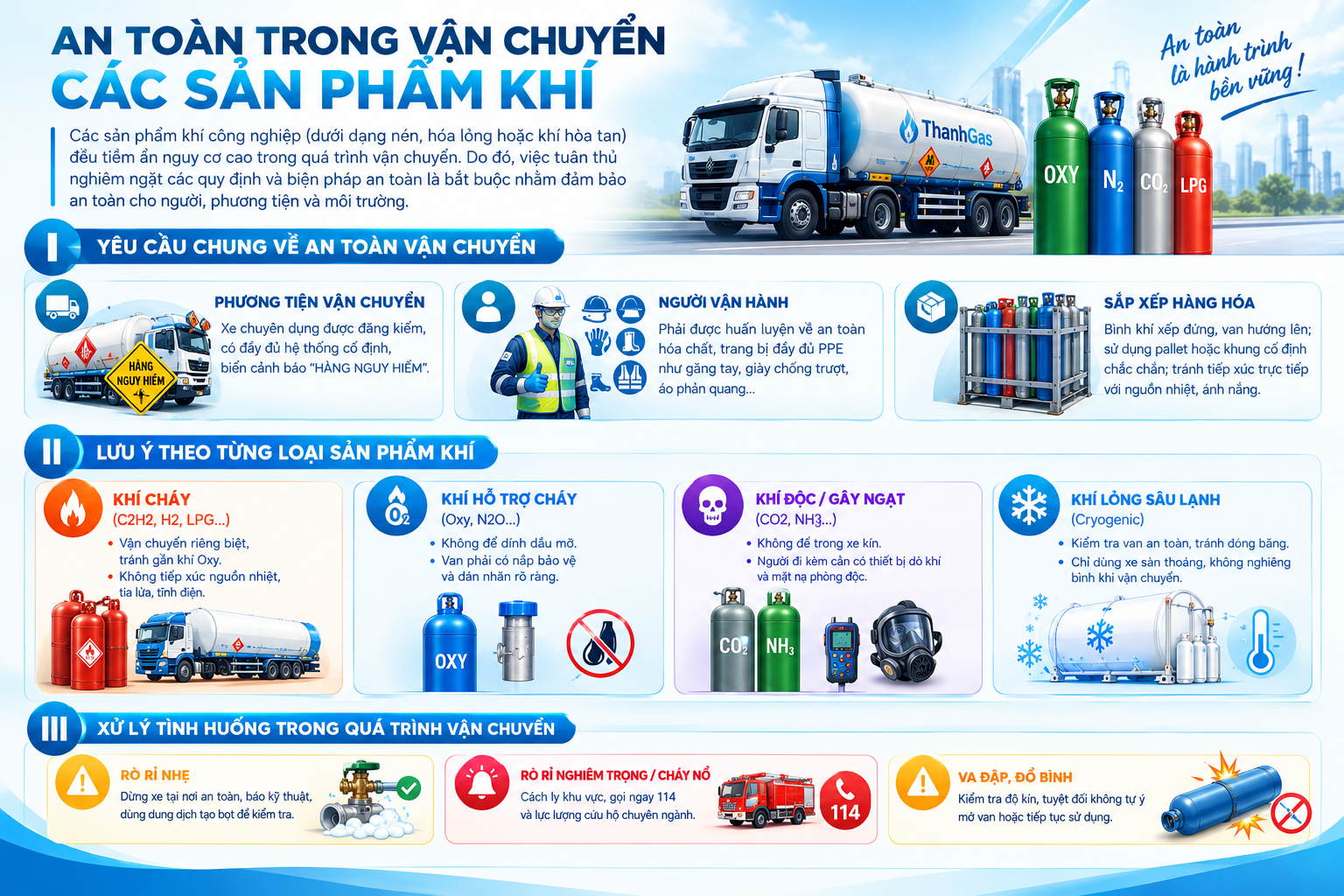
SAFETY IN INDUSTRIAL GAS TRANSPORTATION
Industrial gas products (compressed, liquefied, or dissolved gases) carry inherent risks during transport. Strict adherence to safety regulations and precautions is mandatory to ensure the safety of personnel, vehicles, and the environment.
I. General Safety Requirements for Transportation
- Transport Vehicles: Use certified specialized vehicles equipped with secure fastening systems and “HAZARDOUS GOODS” warning signs.
- Operators: Must be trained in chemical safety and fully equipped with PPE (protective gloves, non-slip shoes, reflective vests, etc.).
- Cargo Loading: Store cylinders upright with valves facing up; secure them with pallets or sturdy frames; avoid direct heat and sunlight.
II. Specific Precautions by Gas Type
- Flammable Gases (C2H2, H2, LPG…): Transport separately from oxygen cylinders. Keep away from heat sources, sparks, and static electricity.
- Oxidizing Gases (O2, N2O…): Strictly prevent contact with oil or grease. Valves must have protective caps and clear labeling.
- Toxic / Asphyxiating Gases (CO2, NH3…): Avoid enclosed vehicles. Accompanying personnel must carry gas detectors and respirators.
- Cryogenic Liquefied Gases: Inspect safety valves to prevent freezing. Use open flatbed trucks only, and do not tilt cylinders during transport.
III. Emergency Response During Transit
- Minor Leak: Park safely, notify technical personnel, and check the leak location using a soap solution.
- Severe Leak / Fire / Explosion: Isolate the area immediately and call emergency services (114) and specialized rescue teams.
- Impact / Fallen Cylinder: Verify tightness; never attempt to open valves or continue using damaged cylinders without inspection.


 Views Today : 581
 Total views : 540129
 Who's Online : 2